Headshots · September 10, 2026
What to Wear for a LinkedIn Headshot Session (Lessons from a Shoot at Bellevue Downtown Park)
I shot Aniruddh's corporate headshots at Bellevue Downtown Park a while back, and it's a good example to point to when people ask me what they should wear or how to get ready for this kind of…
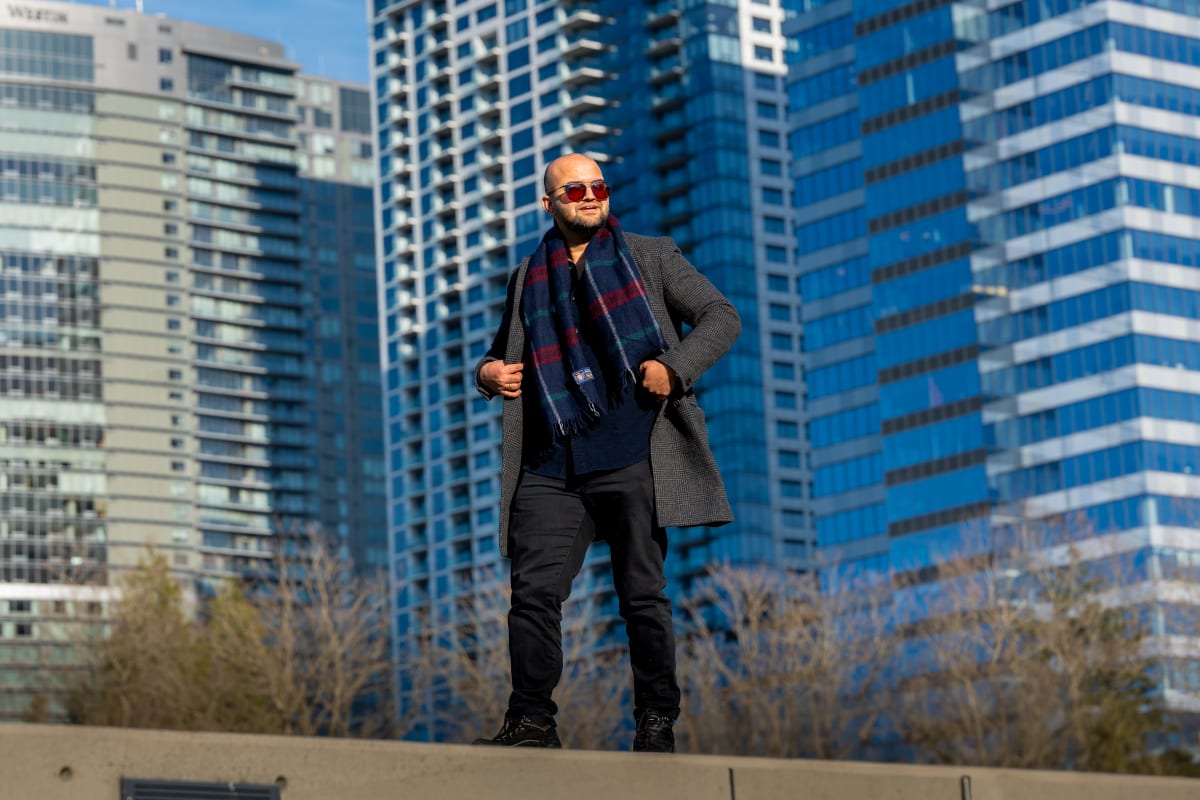
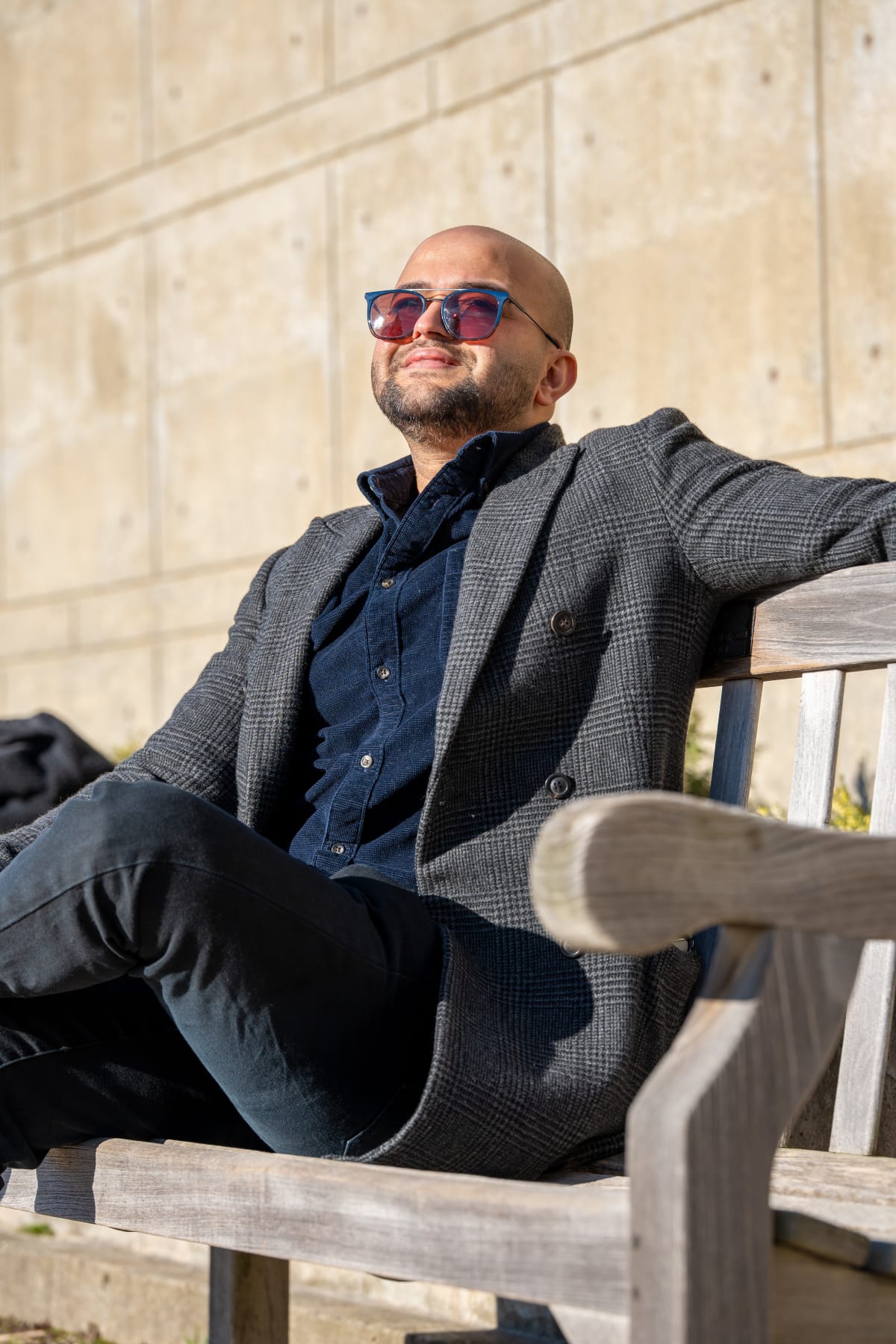
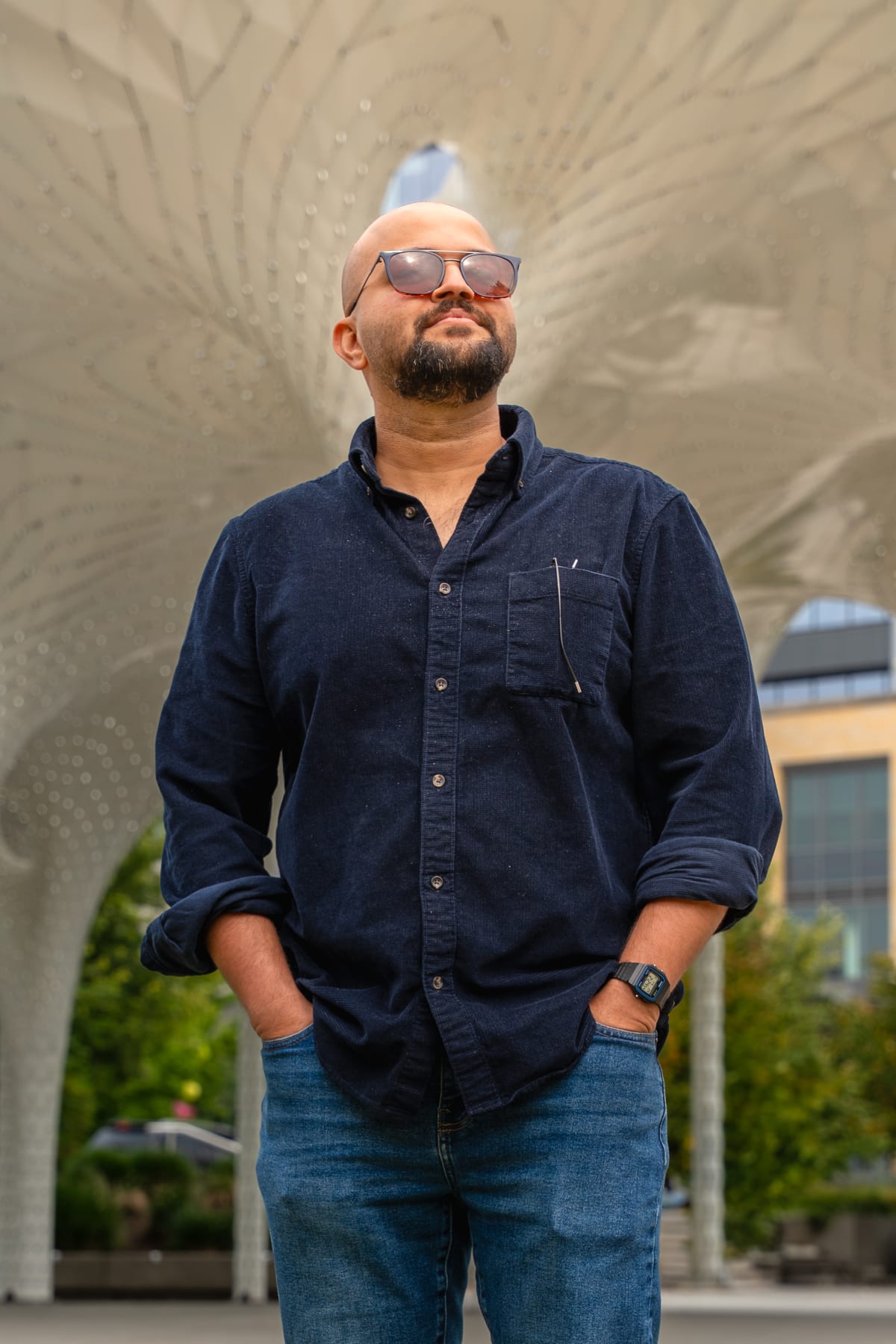
I shot Aniruddh's corporate headshots at Bellevue Downtown Park a while back, and it's a good example to point to when people ask me what they should wear or how to get ready for this kind of session. Corporate headshots are a little different from a portrait or a couples session — the photo has one job, which is to make you look like someone a stranger would want to email back. That changes what matters and what doesn't.
Start with color, not brand. People overthink logos and underthink color. For an outdoor session like Aniruddh's, where the background is green trees, grass, and a fair amount of open sky, solid colors read a lot better than patterns. Busy prints, small checks, and thin stripes can shimmer or vibrate a little in photos — it's a real optical thing with high-resolution sensors like the one in my Sony A7IV, not just an old wives' tale. Solid navy, charcoal, deep green, burgundy — these all hold up. Aniruddh wore a solid button-up, and it separated cleanly from the park background without fighting for attention.
Avoid pure white if you can. It's not a disaster, but on a bright day white can blow out and lose detail, and it also bounces light up under the chin in a way that's not always flattering. A light blue or soft gray does the same "clean" job without the exposure headache.
Fit matters more than the item itself. A slightly-too-big blazer photographs bigger and boxier than it feels in person. A shirt that pulls at the buttons will show it, especially in a three-quarter or seated pose. If you've got a jacket or blazer you're planning to wear, try it on a few days before and actually look in a mirror — not just "does it fit," but "does it fit today." I always tell clients: wear the thing you'd wear to an actual interview for the job you want, not the job you have.
Layers give you options. For headshots I like when people bring a jacket or blazer they can take on and off. It lets us get a few different looks in one session — jacket on for something formal enough for a company directory photo, jacket off with just the button-up for something a little more approachable for LinkedIn. Aniruddh's session gave us both of those looks in about the same amount of time it would've taken to just shoot one.
Think about texture and layering. A blazer over a button-up, or a button-up under a quarter-zip, gives the photo some depth. Flat, single-layer outfits can look a little plain in a headshot, especially cropped close. You don't need to overdo it — one extra layer is usually enough.
Skip the pattern week. No plaid, no small checks, no logos on the shirt itself. Simple is genuinely better here. This is one of the few times in photography where "boring" is actually the compliment.
Grooming and sleep, seriously. This sounds obvious, but it's the thing people forget under time pressure. Get a decent night's sleep before the session — under-eye shadows are hard to fully fix without making someone look like a different person. If you're getting a haircut, get it a few days before, not the morning of, so it has time to settle. Trim what needs trimming. None of this needs to be dramatic — just don't show up straight from a full day of meetings with zero prep.
Time of day is not just an aesthetic choice. Aniruddh's session was scheduled to work with the park's natural light rather than fight it — outdoor sessions like this are a lot easier to plan around good light than trying to force one at high noon. If your session is outdoors, ask your photographer what time they'd recommend and trust that answer. It's not arbitrary. Harsh overhead sun creates dark eye sockets and hard shadows under the nose that no amount of editing fully undoes. Softer light earlier or later in the day is just easier to work with, and it's part of why the location and time get picked together, not separately.
Bring a backup outfit. Even just a second shirt in the car. Coffee spills, wrinkles, a stain you didn't notice until you're standing in front of a green hedge in full sun — having a second option costs you nothing and can save the whole session.
Don't overthink the smile. A lot of people arrive stressed about "looking professional" and end up with a stiff, closed-off expression. The best corporate headshots usually come from a few minutes of just talking normally before the camera comes up close — that's when the real, relaxed expression shows up. I'd rather get five real frames than fifty forced ones.
If you're prepping for your own session — solo, branding, or full corporate — outfit and timing questions are worth asking ahead of time rather than guessing the morning of. You can see how the tiers break down on /pricing, and it's worth bringing a couple of outfit options to any session regardless of which package you book.